Archive News
S60 is a stylish winner


Date Published: 11-Jan-2011
Volvo’s super stylish newest model, the Volvo S60 finally buries the rather dowdy image the brand has carried for once and for all.
Things have been changing over recent years but with this model they have arrived at the cutting edge of modern motoring and with it comes one of the most sophisticated technology packages you will find in any car.
I have been test driving the S60 D3 2.0-litre SE Lux, a car that meets challenges the future demands in terms of style, its classy interior and its unrivalled safety package.
We were already fully aware that Volvo takes car safety very seriously. Here we have a car that goes well beyond the norm in terms of protection for the driver, passengers and other road users.
Apart from the regular gadgetry found in the basic model my test car came with a host of additional features making this the safest car that I have driven in this sector. Those add-ons include: Pedestrian Detection, Adaptive Cruise Control with Distance Alert, Queue Assist, Collision Warning with Full Auto Brake that stops the car completely before you collide with an obstacle at regular traffic speeds and a Lane Departure Warning system that alerts you if you drift from you own lane without using your indicator.
All these systems alert the driver audibly and visually through the Driver Alert Control. And, it must be said all work brilliantly. Volvo has also perfected their Blind Spot Indication System (BLIS) to inform the driver if another vehicle or obstacle is travelling in your blind spot on either side of the car. Here the system tells the driver by using a camera at the base of your door mirrors and an internal warning light on the mirror mounting.
To add to my driving pleasure I got heated front seats (Leather all round) and 18” Alloy Wheels that give the car a dominant kerbside look. Wheels apart, the exterior image of the S60 is positively striking. It is clearly the smartest looking Volvo ever.
That high design drift is carried into the cockpit too. Being a Volvo you would expects functionality as standard and there is little to dissatisfy in this car. The quality is first-rate, the leather seats are soft yet firm and the dash board is purposeful without being garish.
On the motorway and the open road it is impressively smooth and ultra quiet. On the more twisty stuff, however, it is not quite up to the mark of some of its rivals. The ride is too woolly. Volvo has set it up with comfort being a priority but this compromises sharpness principally on back roads.
This was brought home to me on the road between Tuam and Athenry, a journey that especially after the recent weather and the damage done requires precision and accuracy, but I was never confident that the S60 was in its natural environment. The bigger wheels may also be a contributor to this uncertainty but the car was never totally composed in the circumstances.
Under the hood, Volvo uses their newest 163hp, 2.0-litre D3 engine. It is not phased at all by the job at hand. You get plenty of punch, decent pulling power at low revs and a sweet, hushed delivery at the top end. I used 7.4 litres of fuel for every 100kms and CO2 emissions are measured at 139g/km. That puts the car into Tax Band B and €156 per annum road tax.
Prices for the range start at €32,250. My test car with all the extras comes in at €43,377. It may seem to be a hefty premium for the add-ons, some of which I could do without, but that’s up to the individual. The safety items listed above are not overly taxing, costing €2,402 of that additional outlay.
The Volvo S60 certainly does look the part. It will carry you and your family in splendid style and utmost safety while turning heads as you pass by. However, from my viewpoint it falls just a little short in driving dynamics compared to some of it main rivals.

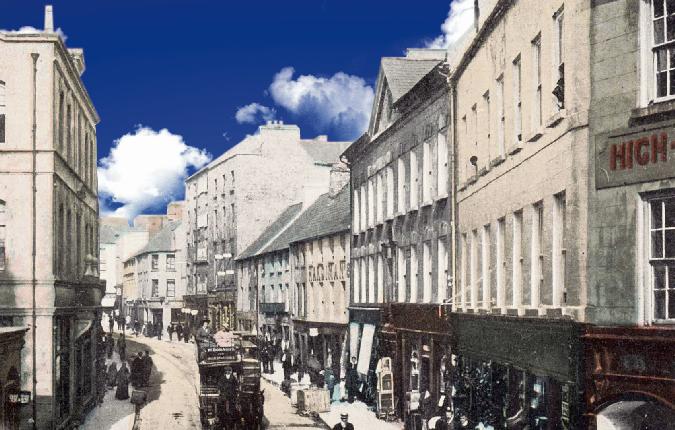
People’s living conditions less than 100 years ago were frightening. We have come a long way. We talk about water charges today, but back then the local District Councils were erecting pumps for local communities and the lovely town of Mountbellew, according to Council minutes, had open sewers,” says Galway County Council archivist Patria McWalter.
Patria believes we “need to take pride in our history, and we should take the same pride in our historical records as we do in our built heritage”. When you see the wealth of material in her care, this belief makes sense.
She is in charge of caring for the rich collection of administrative records owned by Galway County Council and says “these records are as much part of our history as the Rock of Cashel is. They document our lives and our ancestors’ lives. And nobody can plan for the future unless you learn from the past, what worked and what didn’t”.
Archivists and librarians are often unfairly regarded as being dry, academic types, but that’s certainly not true of Patria. Her enthusiasm is infectious as she turns the pages of several minute books from Galway’s Rural District Councils, all of them at least 100 years old.
Part of her role involved cataloguing all the records of the Councils – Ballinasloe, Clifden, Galway, Gort, Loughrea, Mountbellew, Portumna and Tuam. These records mostly consisted of minutes of various meetings.
When she was cataloguing them she realised their worth to local historians and researchers, so she decided to compile a guide to their content. The result is For the Record: The Archives of Galway’s Rural District Councils, which will be a valuable asset to anybody with an interest in history.
Many representatives on these Councils were local personalities and several were arrested during the political upheaval of the era, she explains.
And, ushering in a new era in history, women were allowed to sit on these Rural District Councils – at the time they were not allowed to sit on County Councils.
All of this information is included in Patria’s introductory essay to the attractively produced A4 size guide, which gives a glimpse into how these Rural Councils operated and the way political thinking changed in Ireland during a short 26-year period. In the early 1900s, these Councils supported Home Rule, but by 1920, they were calling for full independence and refusing to recognise the British administration.
“I love the tone,” says Patria of the minutes from meetings. “The language was very emotive.”
That was certainly true of the Gort Rural District Council. At a meeting in 1907, following riots in Dublin at the premiere of JM Synge’s play, The Playboy of the Western World the councillors’ response was vehement. They recorded their decision to “protest most emphatically against the libellous comedy, The Playboy of the Western World, that was belched forth during the past week in the Abbey Theatre, Dublin, under the fostering care of Lady Gregory and Mr Yeats. We congratulate the good people of Dublin in howling down the gross buffoonery and immoral suggestions that are scattered throughout this scandalous performance.
For more from the archives see this week’s Tribunes here

Date Published: 23-Jan-2013
SLIGO 0-9
GALWAY 1-4
FRANK FARRAGHER IN ENNISCRONE
GALWAY’S first serious examination of the 2013 season rather disturbingly ended with a rating well below the 40% pass mark at the idyllic, if rather Siberian, seaside setting of Enniscrone on Sunday last.
The defeat cost Galway a place in the FBD League Final against Leitrim and also put a fair dent on their confidence shield for the bigger tests that lie ahead in February.
There was no fluke element in this success by an understrength Sligo side and by the time Leitrim referee, Frank Flynn, sounded the final whistle, there wasn’t a perished soul in the crowd of about 500 who could question the justice of the outcome.
It is only pre-season and last Sunday’s blast of dry polar winds did remind everyone that this is far from summer football, but make no mistake about it, the match did lay down some very worrying markers for Galway following a couple of victories over below par third level college teams.
Galway did start the game quite positively, leading by four points at the end of a first quarter when they missed as much more, but when Sligo stepped up the tempo of the game in the 10 minutes before half-time, the maroon resistance crumbled with frightening rapidity.
Some of the statistics of the match make for grim perusal. Over the course of the hour, Galway only scored two points from play and they went through a 52 minute period of the match, without raising a white flag – admittedly a late rally did bring them close to a draw but that would have been very rough justice on Sligo.
Sligo were backable at 9/4 coming into this match, the odds being stretched with the ‘missing list’ on Kevin Walsh’s team sheet – Adrian Marren, Stephen Coen, Tony Taylor, Ross Donovan, David Kelly, David Maye, Johnny Davey and Eamon O’Hara, were all marked absent for a variety of reasons.
Walsh has his Sligo side well schooled in the high intensity, close quarters type of football, and the harder Galway tried to go through the short game channels, the more the home side bottled them up.
Galway badly needed to find some variety in their attacking strategy and maybe there is a lot to be said for the traditional Meath style of giving long, quick ball to a full forward line with a big target man on the edge of the square – given Paul Conroy’s prowess close to goal last season, maybe it is time to ‘settle’ on a few basics.
Defensively, Galway were reasonably solid with Gary Sice at centre back probably their best player – he was one of the few men in maroon to deliver decent long ball deep into the attacking zone – while Finian Hanley, Conor Costello and Gary O’Donnell also kept things tight.
For more, read this week’s Connacht Tribune.

Date Published: 23-Jan-2013
images/files/images/x3_Courthouse.jpg
Families queue up for school’s offer of free house

West has lower cancer survival rates than rest

Galway minors continue to lay waste to all opponents

Gardaí and IFA issue a joint appeal on summer road safety

Marathon Man plans to call a halt – but not before he hits 160 races